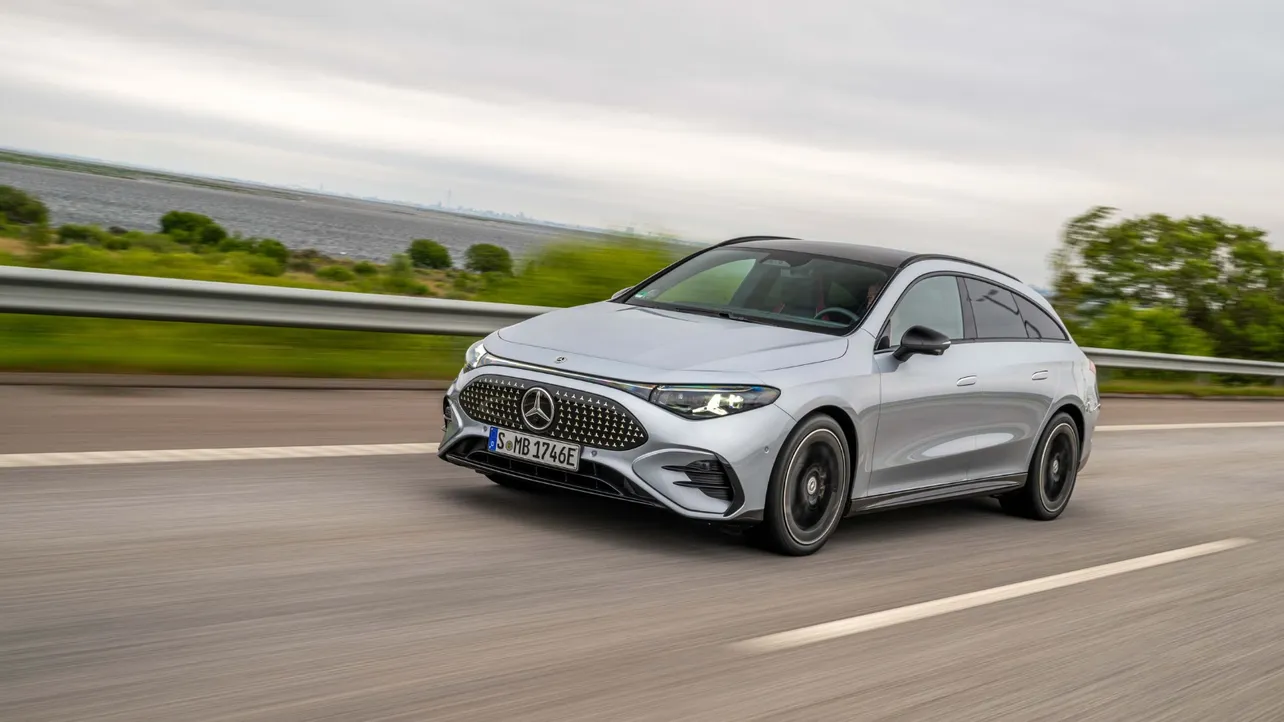
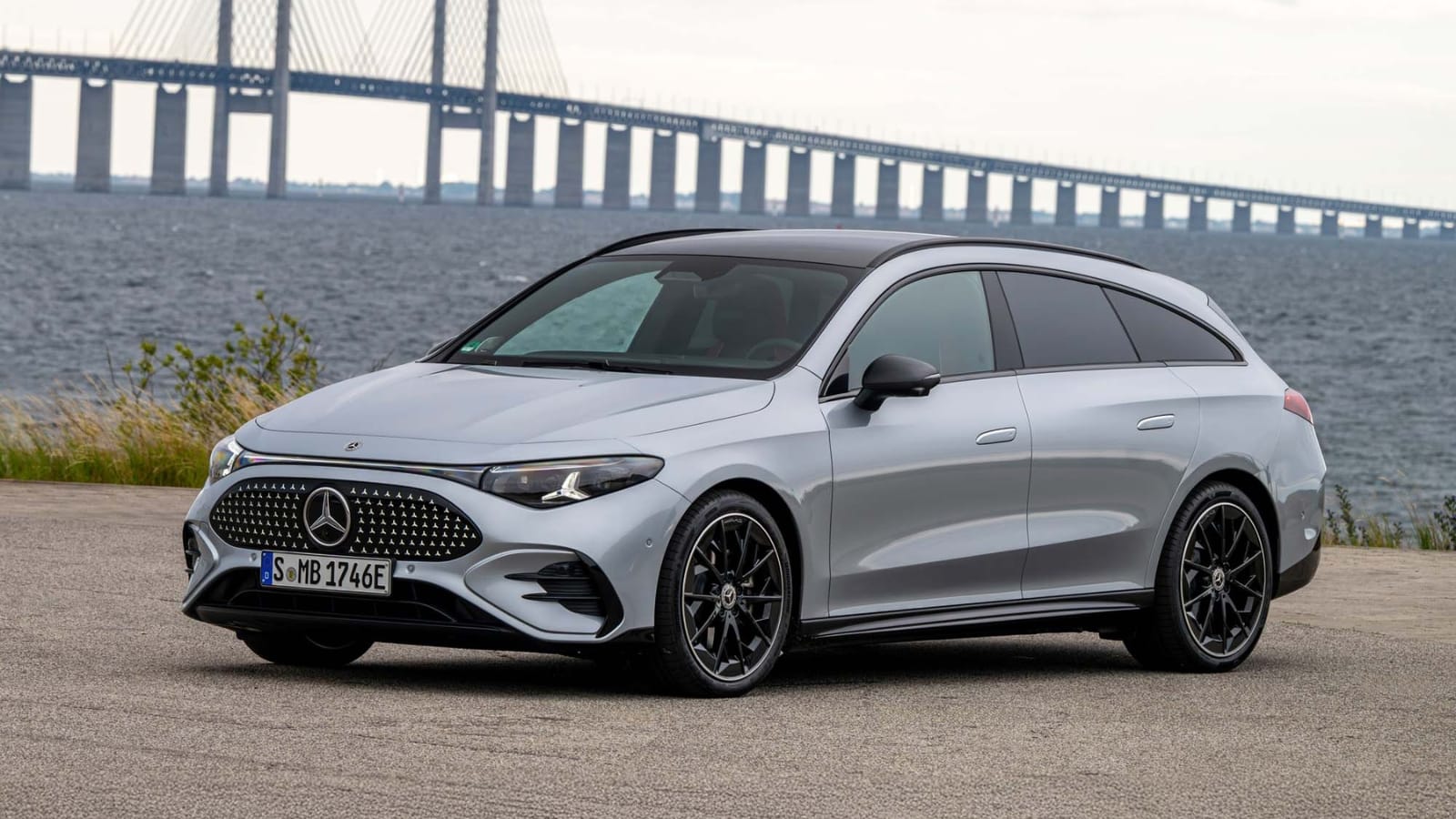
Mercedes has opened UK orders for its new electric CLA estate - badged as the CLA “Shooting Brake” - with prices starting at £47,750 for the 250+ and deliveries beginning in early 2026.
Proper EV estates remain thin on the ground in the UK, and this is the first compact-premium one to arrive with serious long-distance ability.
Two versions at launch and both focused on range and efficiency
The CLA estate launches with two versions built on Mercedes’ new MMA platform. The 250+ uses an 85 kWh usable NMC battery and a single 200 kW motor on the rear axle and delivers up to 469 miles range (WLTP).
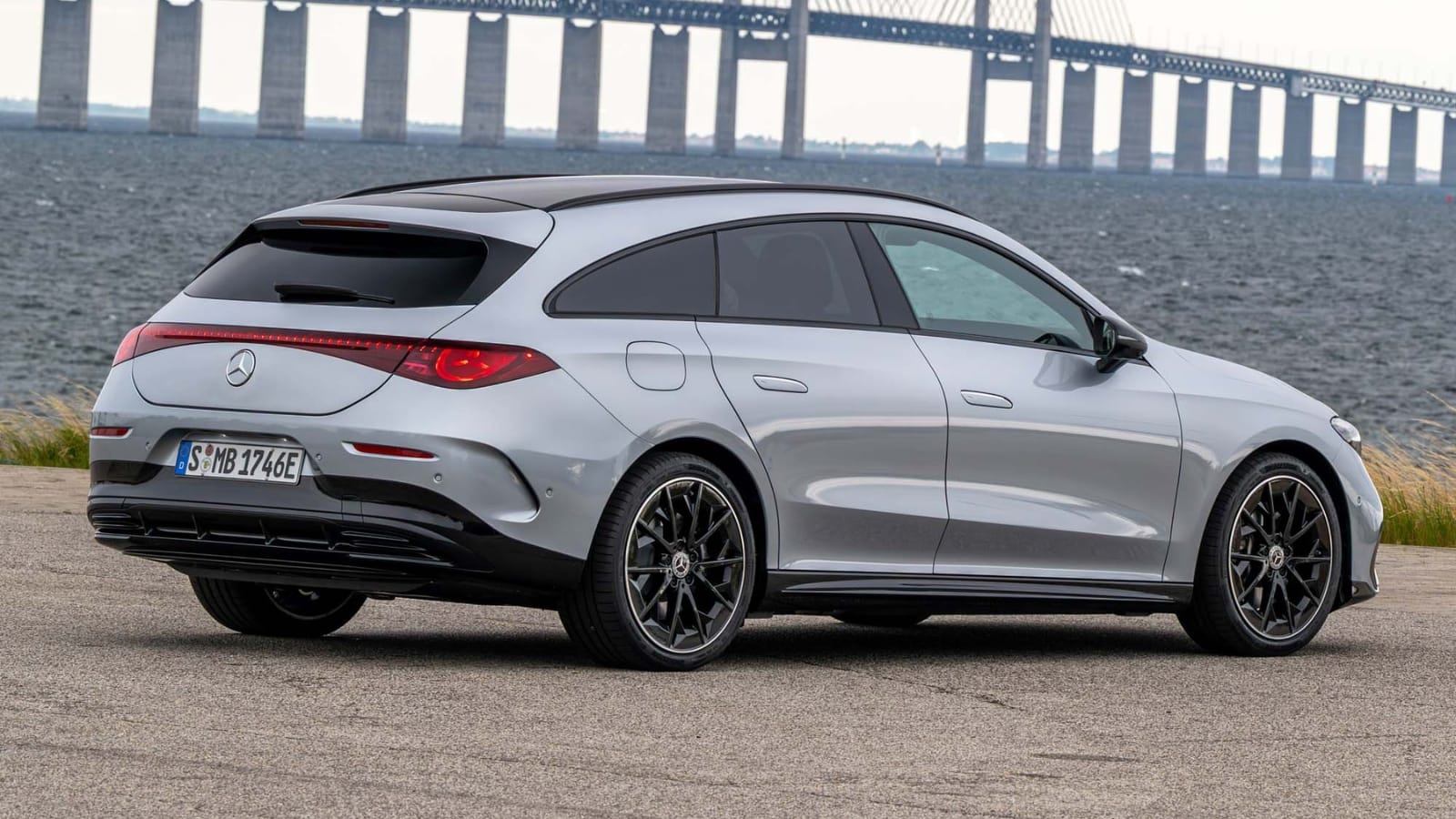
The 350 4MATIC keeps the same rear motor and adds an 80 kW unit at the front for on-demand all-wheel drive and a combined 354 hp, with range quoted at up to 451 miles (WLTP).
Both use the company’s two-speed transmission, which is still unusual in this size of EV, with the idea to keep motorway efficiency under control rather than relying on a single reduction gear (more on that later).
Performance sits at 6.8 seconds to 62 mph for the 250+ and five seconds flat for the 350.
Charging performance depends on ticking a key option for the UK
Charging capability reaches 11 kW AC and up to 320 kW DC on 800-volt hardware, meaning it can take advantage of the fastest public chargers currently available.
There is a notable UK-specific footnote here because most rapid chargers in the UK are still 400-volt units, and the CLA needs an extra onboard component to work with them at full speed. Mercedes requires buyers to tick a roughly £850 option for the car to use these 400-volt chargers efficiently.
Without it, you are relying on the much smaller 800-volt network, which works well at newer Ionity or Gridserve hubs but is far less common at the majority of supermarket, retail and hotel chargers.
In simple terms, the option determines whether the car will fast-charge almost everywhere, or only at a narrower set of premium locations.
Practicality and packaging that suit family use
As an estate, the CLA makes good use of its footprint. Boot space is 1,290 litres with the rear seats folded, supported by a low, clean load floor, and there is a 101-litre frunk to keep charging cables separate from the main luggage area.
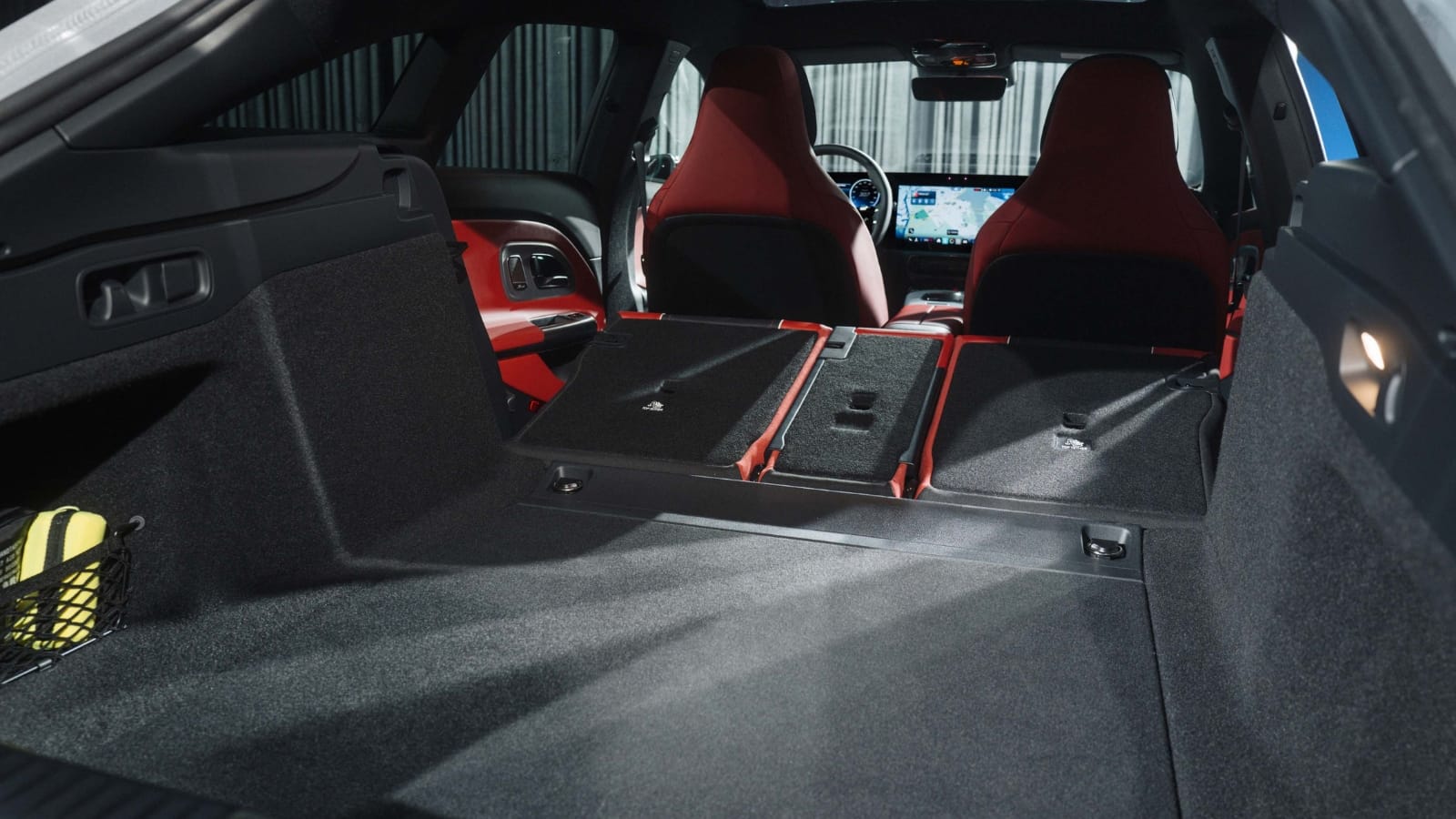
This layout helps preserve cabin space while keeping everyday storage practical, and the frunk is particularly useful on EVs because it stops the boot becoming cluttered with cables.
The car itself is slightly longer and a shade roomier than the previous CLA Shooting Brake, sitting around the 4.7-metre mark, which is very much compact-premium territory rather than executive-estate size.
New MB.OS interior with a choice of screen layouts
Inside, the cabin is built around Mercedes’ new MB.OS software, which brings navigation, charge planning and driver assistance together in a single platform rather than spreading features across separate modules.
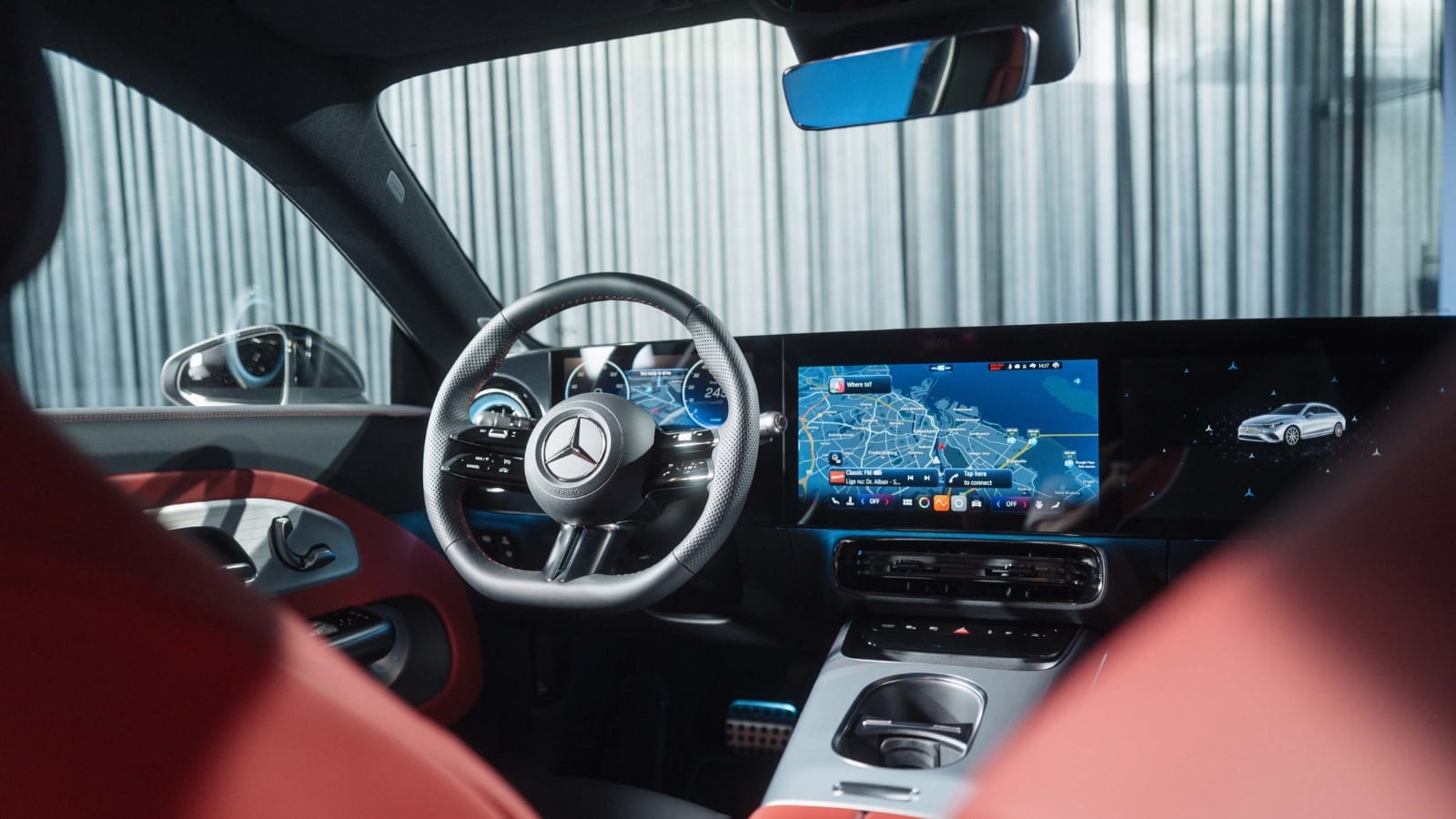
The system constantly monitors the car’s state of charge, temperature, route and charging availability to decide what to display and how to plan journeys, making everyday use feel more coherent than older-generation systems.
Every version includes a 14-inch central display, while AMG Line Premium trims and above bring the full-width Superscreen that adds a second 14-inch display for the passenger.
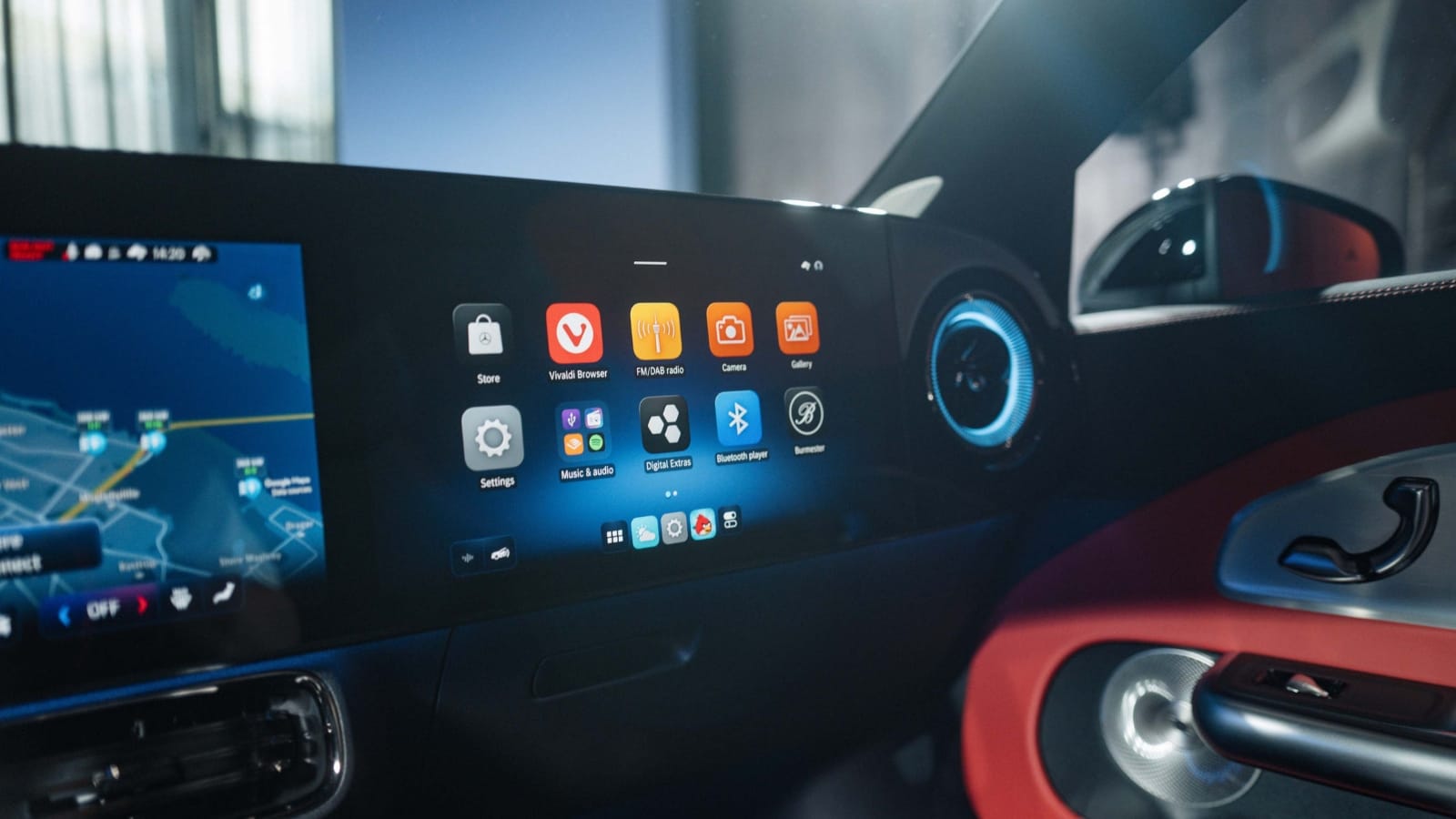
The trim progression follows Mercedes’ usual pattern, with the panoramic roof and LED headlights fitted to the entry-level cars, and the higher trims layering in stronger climate control, driver assistance, Burmester audio and a winter pack.
The space it fills between MG5, Astra Electric and the big ID.7 and i5 wagons
Until now, anyone wanting an EV estate in the UK has had to pick from the MG5, Astra Sports Tourer Electric or Peugeot e-308 SW at the affordable end, or move straight to the larger and pricier Volkswagen ID.7 Tourer or BMW i5 Touring.
The smaller cars top out around the mid-200-mile WLTP range mark and use smaller batteries, making them more suited to commuting and shorter regional journeys. The bigger two deliver strong numbers but bring the size, weight and cost associated with full executive-class wagons.

The CLA estate lands directly in the space between those two ends of the market and does so with range figures that rival the bigger cars.
Real-world range expectations for UK drivers
In the real world, you would expect roughly 375 to 400 miles from the 250+ in mixed UK driving once you account for weather, temperature, gradients and accessories. Steady motorway speeds are likely to return something around 300 to 350 miles depending on conditions, load and tyre choice.
The two speed transmission mentioned earlier works by using a shorter first gear for acceleration and low-speed work, and then shifting into a taller second gear to keep motor rpm low at higher speeds, which reduces energy consumption on long motorway stretches.
That is a meaningful step up from the smaller Stellantis-based estates and puts the CLA right up against the ID.7 and BMW i5 on endurance without copying their scale.
In practical terms, it means fewer charging stops on long trips and more predictability in winter, where many mid-size EVs often struggle.
Thoughts
Mercedes has delivered a compact premium electric estate at a time when most manufacturers have abandoned the format in favour of SUVs.
It does not rely on styling gimmicks or lofty positioning, just a sensible shape, a large battery, an efficient drivetrain and the sort of range that lets it act as a long-distance family EV rather than an urban specialist.
The price means it will not be a mainstream choice, but for the buyers who have been waiting for something like this, it is the first credible option in years.