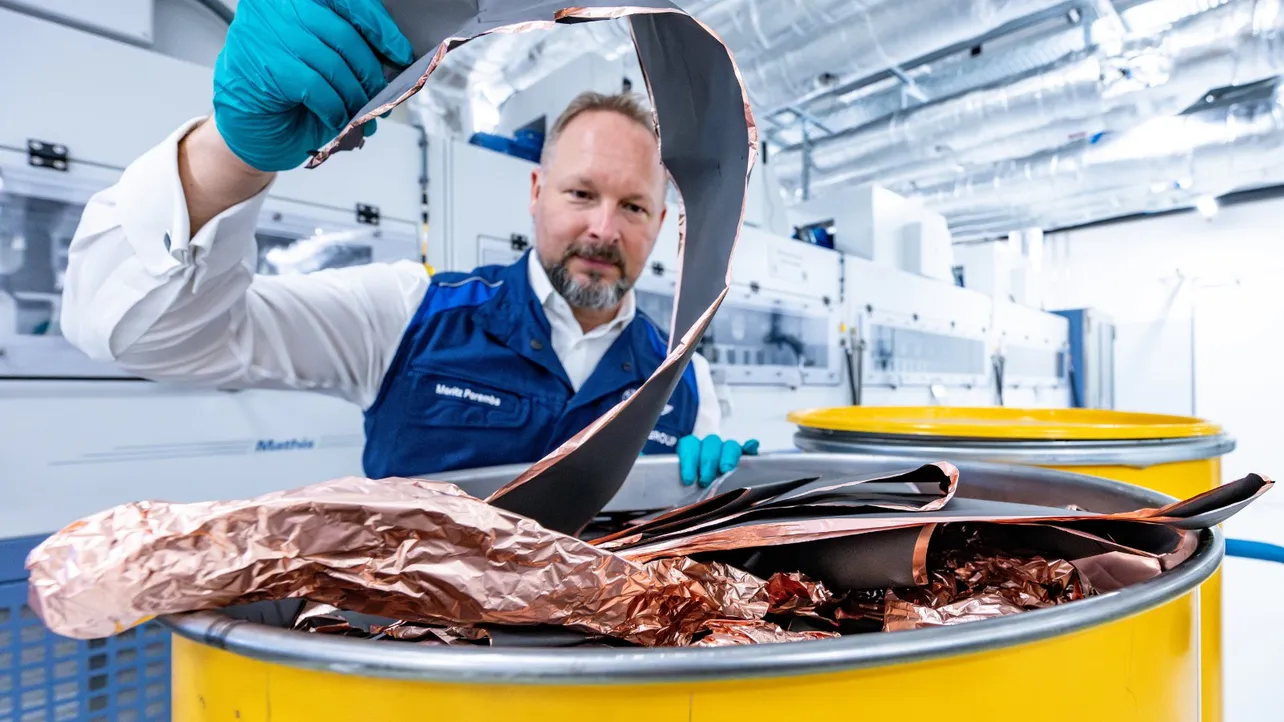
BMW Group has brought a new battery recycling facility into operation in Salching, Bavaria, using a mechanical “direct recycling” process designed to recover and reuse materials from electric vehicle battery cell production.
The site - known as the Cell Recycling Competence Center (CRCC) - is operated by Encory GmbH, BMW’s 50:50 joint venture with recycling specialist Interzero, and forms part of the carmaker’s battery development and production footprint in southern Germany.
Direct battery recycling
According to BMW, direct recycling involves mechanically dismantling surplus battery cell material, including complete cells from manufacturing, and feeding the recovered material straight back into the battery production process.
Unlike conventional battery recycling routes - which typically rely on energy-intensive chemical (hydrometallurgical) or thermal (pyrometallurgical) treatment to break cells down into basic elements - BMW’s approach aims to preserve more of the material’s original structure and value.
The company says this reduces energy use and allows recovered materials to be reused more quickly within its own production system, rather than being processed into generic secondary raw materials.
Recycling alongside BMW’s battery production sites
The Salching facility sits alongside BMW’s existing battery operations in Bavaria.
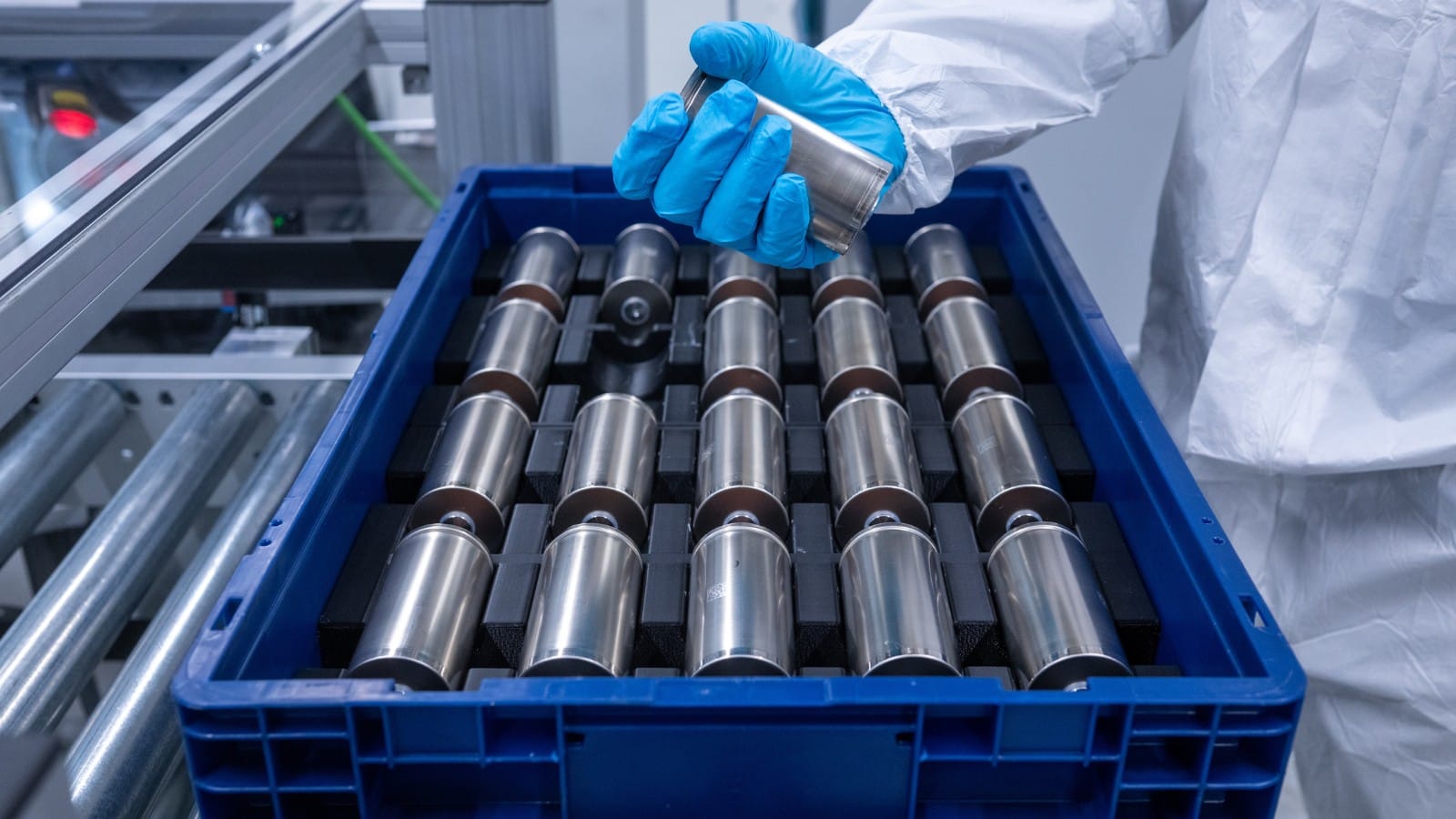
Battery cells are developed in small volumes at the Battery Cell Competence Center (BCCC) in Munich, scaled up on a pilot production line at the Cell Manufacturing Competence Center (CMCC) in Parsdorf, with surplus material from that process recycled in Salching. Recovered material is then sent back to Parsdorf for reuse in pilot cell production.
BMW says keeping development, production and recycling sites within close proximity reduces transport distances and limits material losses during the development phase.
Modest volumes, strategic intent
Once fully operational, the CRCC is expected to recycle battery cell material in the mid-double-digit tonne range per year. While small by industrial recycling standards, BMW is positioning the site as a development and scale-up platform rather than a mass-processing facility.
The intellectual property behind the direct recycling process is fully owned by BMW Group, despite Encory being responsible for construction and operation of the site. Around 20 people will be employed at the Salching centre.
Why battery recycling is becoming a strategic issue
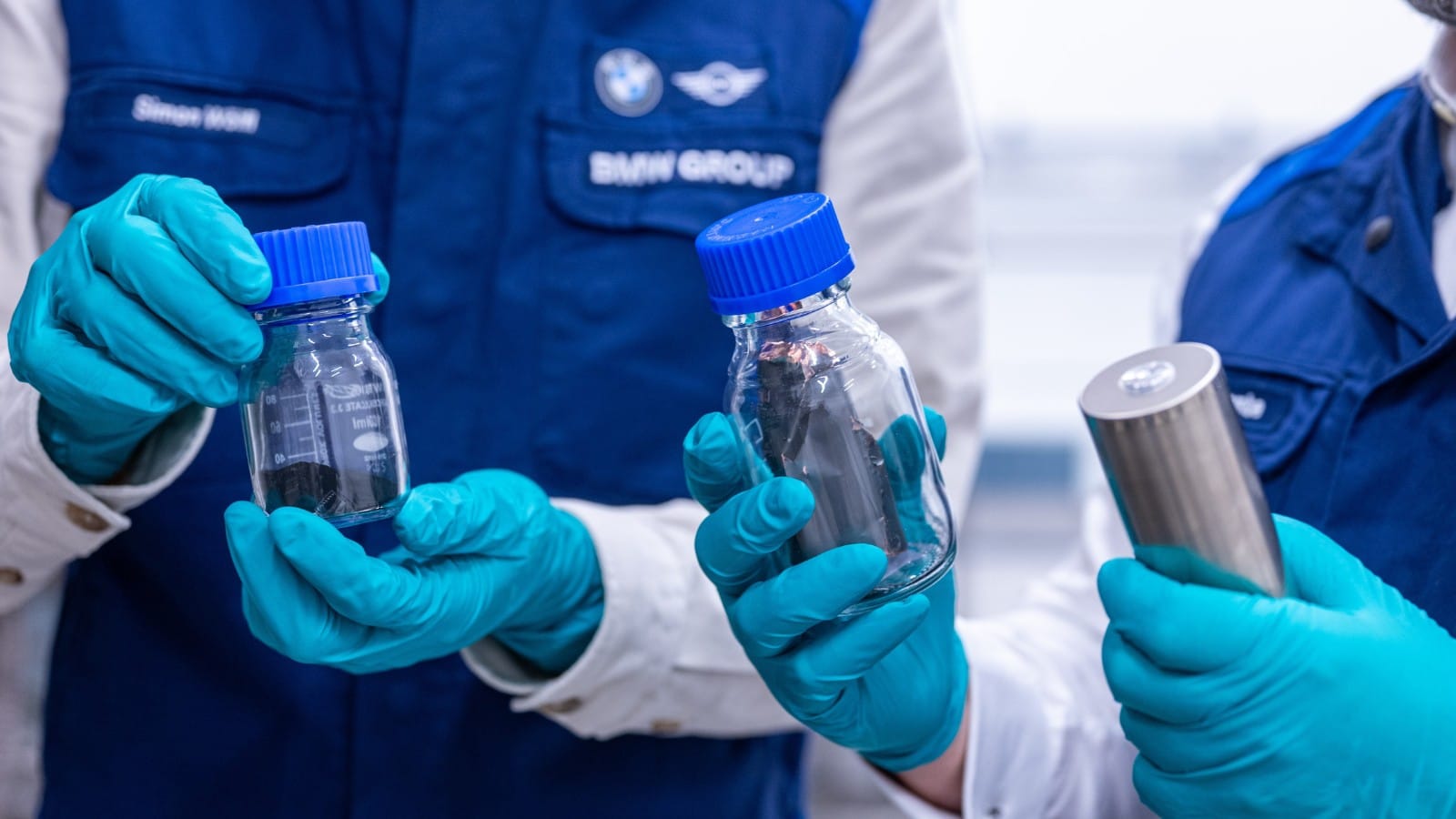
As electric vehicle production scales globally, battery raw materials such as lithium, nickel, cobalt and graphite are becoming both a cost and a supply-chain risk. Conventional recycling routes can recover valuable metals, but they are energy-intensive and often disconnected from battery manufacturing itself.
Direct recycling is attracting growing interest as a way to reduce energy input, shorten supply loops and retain more material value, though it is still far less proven at scale than established chemical recycling processes.
Part of BMW’s wider circular economy approach
BMW frames the new recycling centre as part of its broader circular economy strategy, which includes increasing recycled content in vehicles and designing components with recovery in mind.
The Salching site focuses on surplus material from battery cell manufacturing rather than end-of-life vehicle batteries, but it provides BMW with an operational testbed for integrating recycling directly into battery production - a capability that could become more relevant as cell volumes increase.