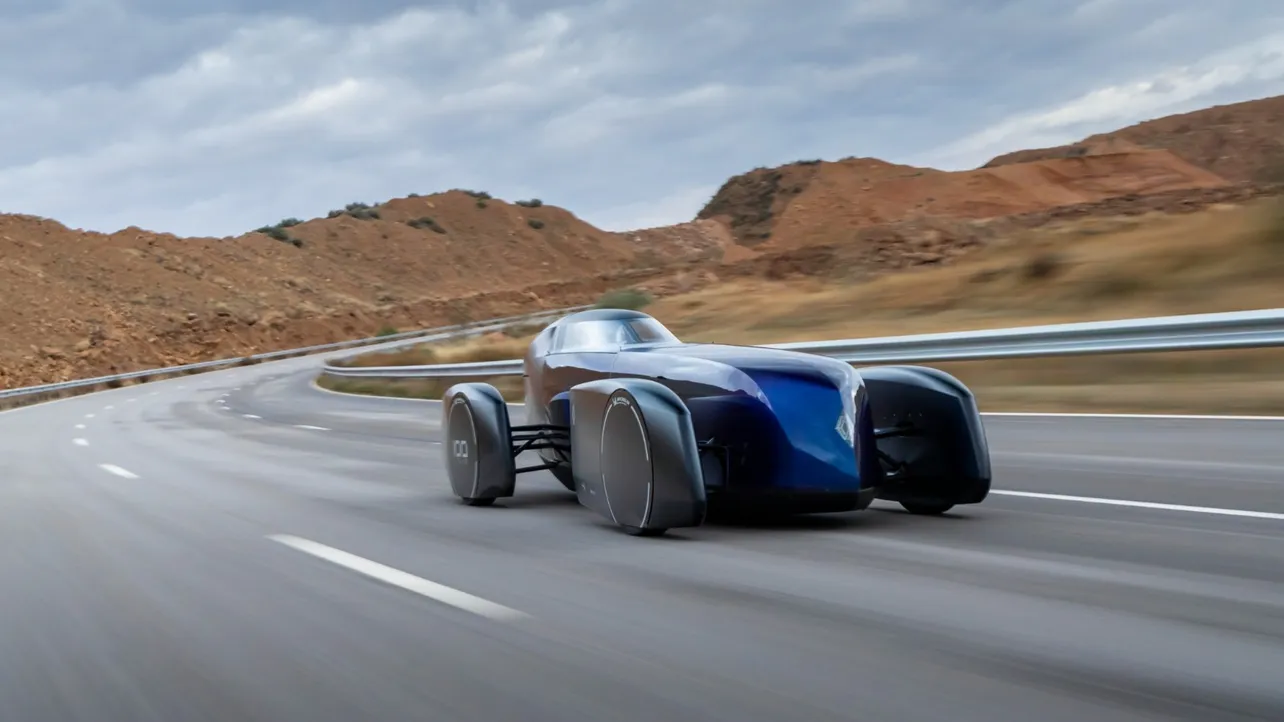
Renault has demonstrated that an electric vehicle can travel over 1,000km at sustained motorway speeds on a single charge, using a battery no larger than those fitted to its current production cars.
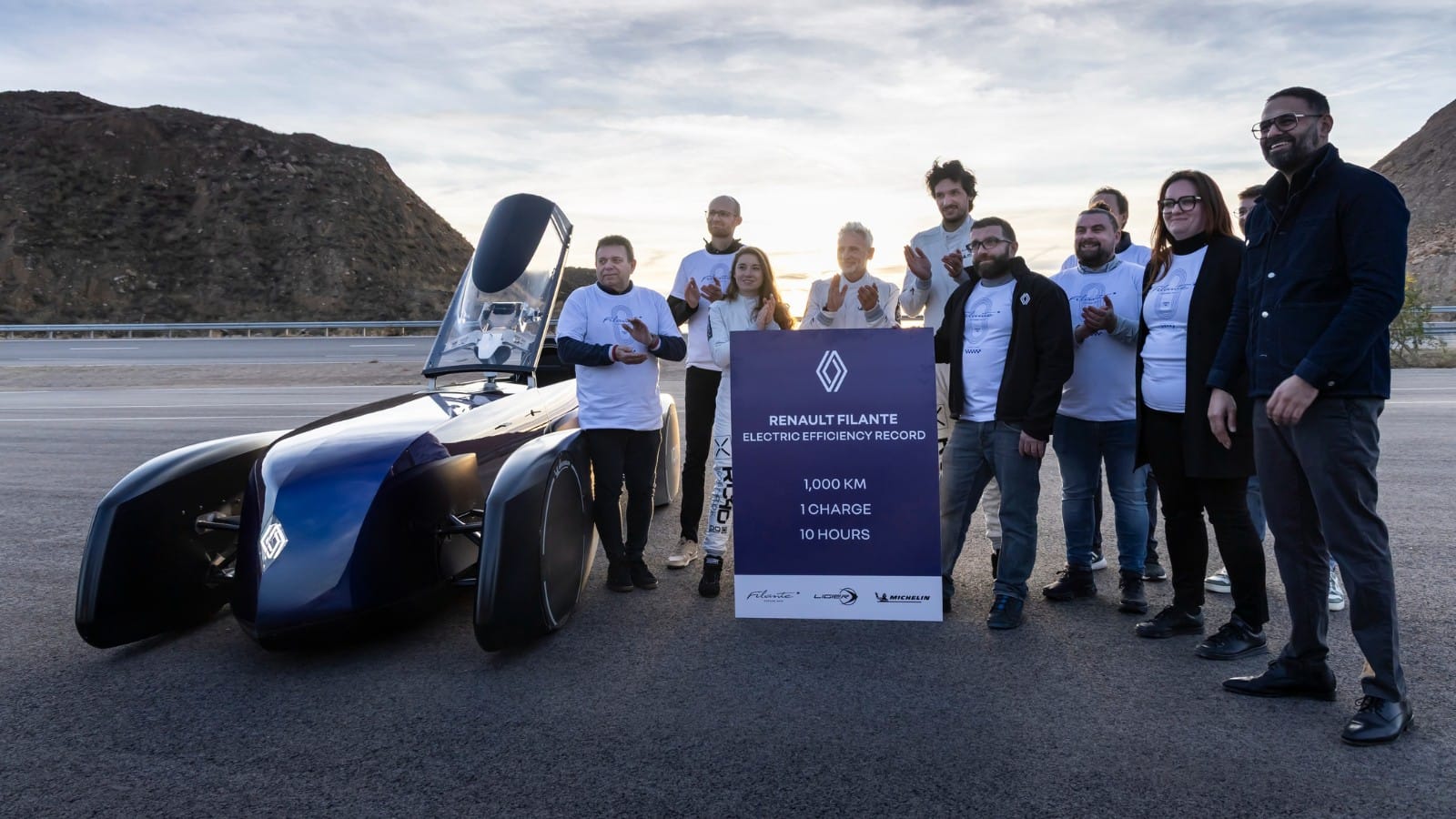
The Filante Record 2025, a purpose-built single-seat demonstrator, covered 1,008km in under 10 hours at the UTAC test track in Morocco on 18 December, averaging 102km/h and consuming just 7.8kWh per 100km. At the end of the run, the car still had 11% battery remaining - enough, Renault says, for another 120km at the same pace.
The 87kWh battery is identical in capacity to the one used in the Renault Scenic E-Tech, which has a WLTP range of around 610km but drops to roughly 400km at sustained highway speeds. The Filante's consumption figure is approximately half that of the Scenic under comparable conditions.
Aerodynamics reworked after wind tunnel tests
The Filante was first shown in January 2025 at the Rétromobile show in Paris, styled as a tribute to Renault's 1925 40 CV and 1956 Étoile Filante record cars. Wind tunnel testing in the spring revealed the original design had a drag coefficient of around 0.40 - too high for the efficiency targets.
Engineers reduced it to approximately 0.30 by redesigning the wheel fairings. Originally styled to echo the Étoile Filante, they were remounted directly onto the wheels rather than the body, improving airflow around the suspension and drivetrain. Air inlets were reduced to the minimum required for thermal management.
Jocelyn Mérigeault, Renault's aerodynamics engineer, said the car had "a genuine predisposition for aerodynamics" from the outset. "Our work was about revealing that potential and aligning it with the performance objectives."
Lightweight construction and steer-by-wire
The Filante weighs around 1,000kg - roughly half the mass of a production Scenic - achieved through carbon fibre bodywork, aluminium alloys and 3D-printed components made from Scalmalloy, a lightweight aerospace material.
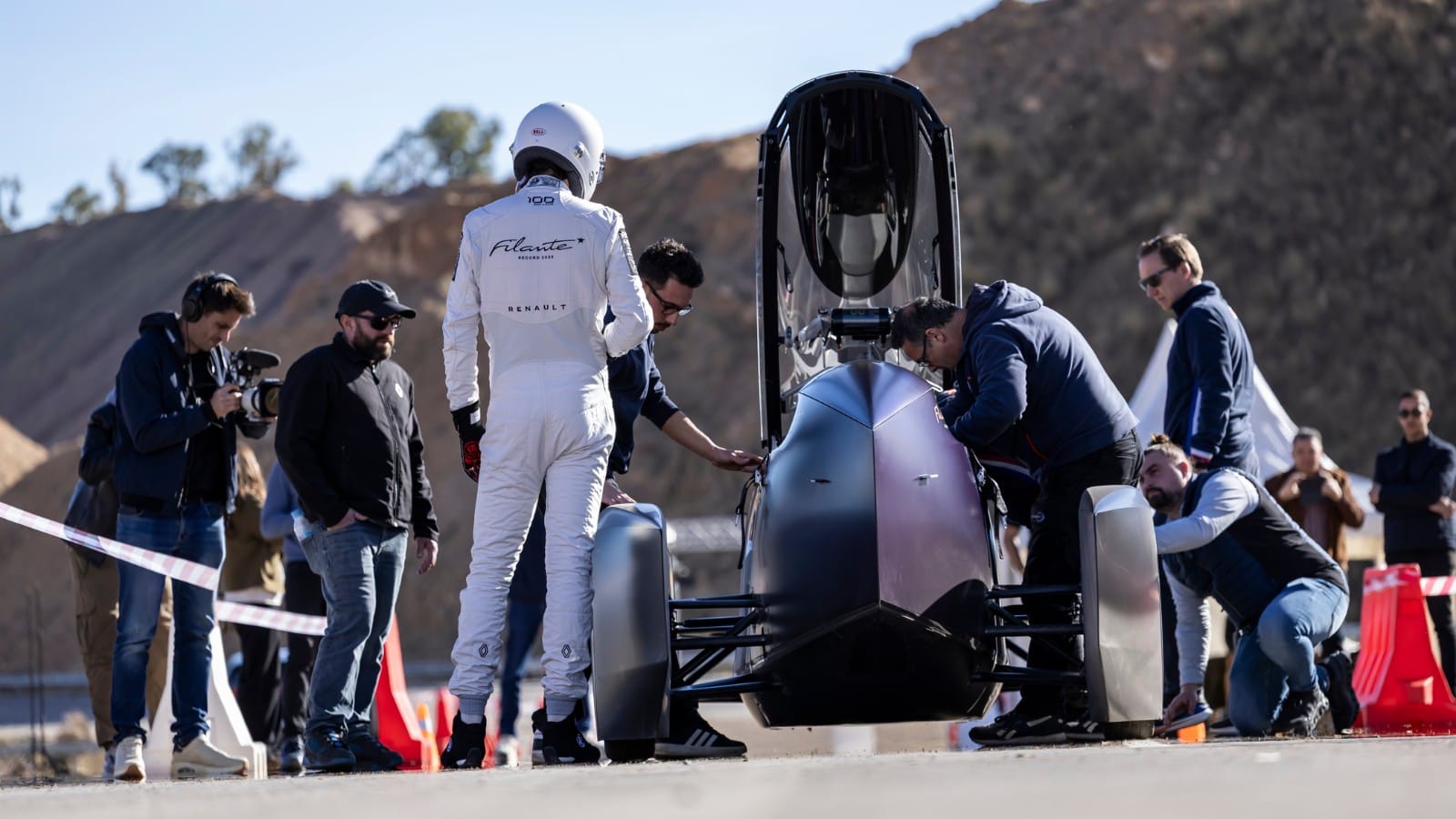
It also uses steer-by-wire and brake-by-wire systems, eliminating mechanical linkages to reduce weight and free up packaging space. Michelin developed bespoke low-rolling-resistance tyres for the project.
Ligier, best known for lightweight sports cars and junior single-seaters, built the chassis and integrated the powertrain.
Lessons for production EVs
Renault is clear the Filante is not a preview of any future model. However, the company says findings from the project will feed into the development of its next-generation electric vehicles - particularly in areas such as aerodynamic optimisation, lightweight construction and system-level efficiency.
The record attempt was completed by three drivers rotating in shifts: development driver Laurent Hurgon, chassis engineer Constance Léraud-Reyser and chassis tuning engineer Arthur Ferrière. A first attempt in France in October was cancelled due to weather; the team relocated to Morocco for the successful run in December.