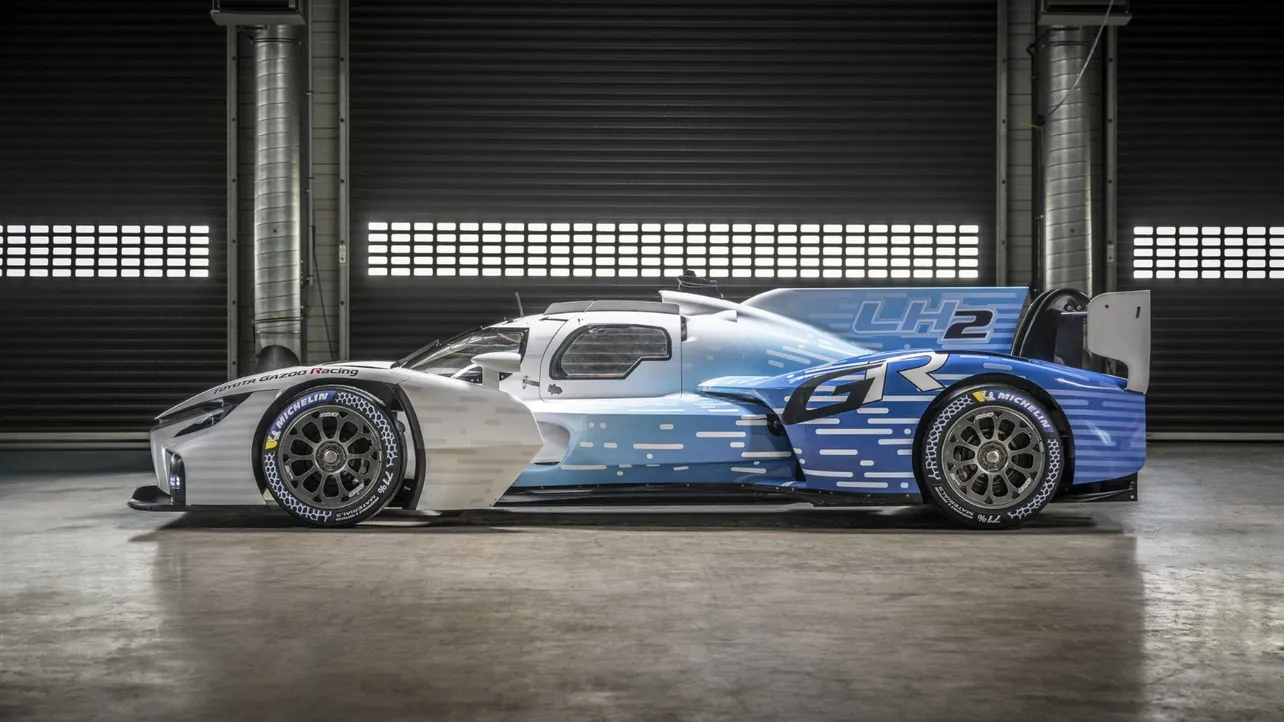
The FIA has published the first safety and technical regulations for liquid hydrogen-powered vehicles in motorsport, a step towards introducing the technology in endurance racing by the end of the decade.
The rules were ratified by the World Motor Sport Council in Macau in June and cover storage systems, refuelling procedures and vehicle integration. According to the FIA, they were developed with input from aerospace, automotive, energy and materials science specialists - including Arianespace, the European rocket manufacturer, which has decades of experience handling liquid hydrogen.
Nicolas Aubourg, the FIA's Head of R&D, said hydrogen represented "possibly the ultimate expression" of decarbonisation in motorsport. "You put H₂ and oxygen from the air in your power unit, and the only byproduct at the exhaust is water," he said.
Why liquid over compressed gas
The project began in 2021 with a focus on compressed gaseous hydrogen, the form used in road vehicles like the Toyota Mirai. However, the FIA found the storage requirements impractical for racing.
"If you want to design a hypercar, you have to have big, pretty heavy tanks and that makes the design of a race car quite complicated," Aubourg said. "Also, the time for refuelling is long - it's very difficult to do it below two minutes or even three minutes."
Liquid hydrogen offers higher energy density and lighter storage, but presents its own challenges. It must be kept at around -253°C, and any heat causes "boil-off" - evaporation that builds pressure in the tank and must be carefully managed to prevent leaks or fires.
Aubourg said the solution is relatively straightforward: a vacuum jacket around the tank provides insulation. The short storage times required in racing - unlike road cars - also simplify the problem.
Le Mans hydrogen class planned for 2028
The regulations are designed to support the ACO's plan for a hydrogen class in the World Endurance Championship, with the 24 Hours of Le Mans as the flagship event. The target is 2028, though the ACO has acknowledged that a Garage 56 experimental entry may be more realistic than a full class in the first year.
Toyota has been the most active manufacturer, unveiling a liquid hydrogen concept based on the GR010 Hybrid at Le Mans last year and partnering with the MissionH24 project on aerodynamics and cooling. Alpine and BMW have also expressed interest, as has Ferrari - Aubourg noted the Italian manufacturer sees potential for hydrogen combustion engines rather than fuel cells.
Refuelling remains a significant challenge. Existing liquid hydrogen stations for heavy-duty trucks can refuel a vehicle in around 10 minutes for 1,000km of range. Motorsport requires something closer to 40 seconds - a rate of 1kg per second - which the FIA says initial simulations suggest is achievable.
Weight and pump development
Tank weight is falling as manufacturers develop composite designs, Aubourg said, but pumps remain a bottleneck. Existing liquid hydrogen pumps weigh around 30kg, compared to 500 grams for a fossil fuel equivalent. Prototypes are under development to close the gap.
Physical testing of storage systems began in October 2024 and is ongoing. The programme includes pressure tests, simulated pipe failures and deliberate destruction of tanks to study full liquid hydrogen spills.
Aubourg described the project as a return to motorsport's role as a technology laboratory. "It's been a long time since I have seen that motor sport can be such a laboratory," he said. "People, especially young people, are extremely concerned by sustainability matters. If we want to race tomorrow, we have to do this."