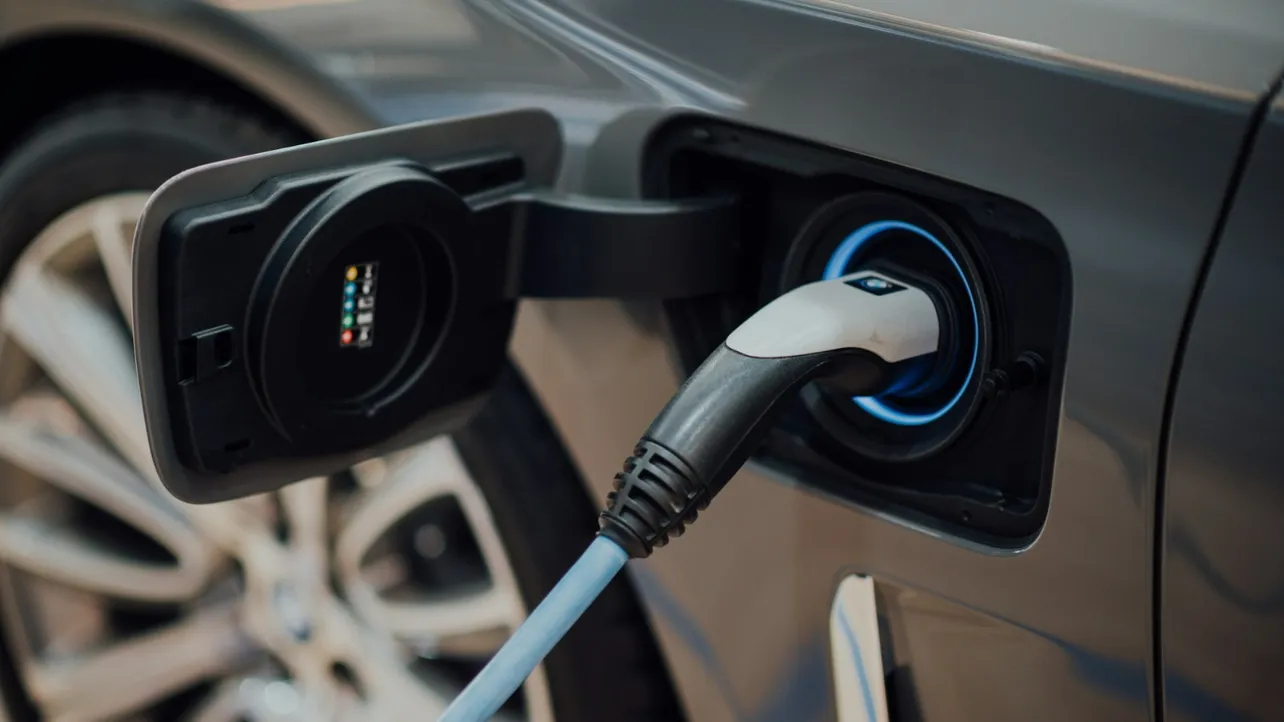
The Zero Emission Vehicle mandate – usually shortened to "ZEV mandate" – is the UK regulation that compels car and van manufacturers to ensure a certain percentage of their annual sales are zero-emission vehicles. It came into force on 3 January 2024 under the Conservative government and remains the central pillar of Britain's road transport decarbonisation strategy.
In practice, a zero-emission vehicle means a battery electric vehicle or a hydrogen fuel cell vehicle. Plug-in hybrids and conventional hybrids do not count toward the ZEV target itself, though they play a role in the broader compliance picture through separate CO2 provisions.
The targets
The headline figures are straightforward enough. For cars, manufacturers must ensure the following percentages of their sales are zero-emission:
- 2024: 22%
- 2025: 28%
- 2026: 33%
- 2027: 38%
- 2028: 52%
- 2029: 66%
- 2030: 80%
- 2035: 100%
Van targets follow a similar trajectory but start lower and climb more steeply: 10% in 2024, rising to 70% by 2030 and 100% by 2035.
The targets between 2031 and 2034 remain indicative rather than fixed in legislation, though the government has suggested figures of 84%, 88%, 92% and 96% for cars in those years.
Where it came from
The ZEV mandate is not a British invention. Its lineage traces back to California, where the California Air Resources Board first adopted zero-emission vehicle requirements in 1990 as part of its Low Emission Vehicle regulations. The Californian approach emerged primarily from air quality concerns – the state's notorious smog problem – rather than climate change, though the latter has since become the dominant rationale.
California's programme has been through countless revisions since then, weathering industry opposition, technological setbacks, and the inconvenient truth that battery technology took considerably longer to mature than regulators had hoped. What began as a requirement for 2% of sales in 1998 has evolved into a 100% ZEV target for 2035 under the Advanced Clean Cars II rule.
The UK's version borrows heavily from the Californian template, including many of its compliance flexibility mechanisms, though adapted for British conditions and European regulatory traditions. The Climate Change Act provides the broader statutory framework.
How compliance actually works
The headline percentage figures tell only part of the story. The system is considerably more nuanced – critics might say convoluted – than a simple sales quota.
Manufacturers earn ZEV credits by selling zero-emission vehicles. Each qualifying vehicle generates credits based on its electric range, with longer-range vehicles earning more. These credits can be banked, borrowed, traded between manufacturers, or converted for use in the parallel CO2 emissions scheme.
Banking allows manufacturers to store excess credits from good years for use when times are harder. Credits can be held on a rolling three-year basis.
Borrowing permits manufacturers to draw against anticipated future sales if they know an important electric model is arriving soon. This comes with a 3.5% compound interest rate, making future targets progressively harder to meet. Initially, manufacturers could borrow up to 75% of their annual requirement in 2024, dropping to 25% by 2026.
Pooling enables manufacturers under common ownership to share credits across their brands – useful for groups like Stellantis, which encompasses everything from Vauxhall to Maserati.
Trading allows manufacturers with surplus credits to sell them to rivals struggling to meet their targets. This creates a market mechanism whereby efficient EV producers effectively subsidise those lagging behind.
The CO2 overlay
Running alongside the ZEV mandate is the Vehicle Emissions Trading Scheme, which sets CO2 limits for non-ZEV sales. Manufacturers that reduce their conventional fleet's average emissions below a 2021 baseline can convert this overperformance into ZEV credits.
This mechanism proved controversial from the outset. It allows manufacturers to partially meet their ZEV obligations by selling more efficient petrol and diesel vehicles rather than actual electric ones. In the early years of the scheme, this flexibility was meant to ease the transition, but following the April 2025 revisions, manufacturers can now meet up to 90% of their 2025 ZEV obligations through CO2 credits – double the previous 45% cap.
The practical effect, as analysis from the International Council on Clean Transportation has noted, is that the 28% headline target for 2025 translates to an actual ZEV sales requirement closer to 20% once flexibilities are factored in.
The penalties
Manufacturers that cannot meet their obligations through any combination of the above mechanisms face what the government euphemistically calls "non-compliance payments." These were originally set at £15,000 per car and £18,000 per van sold in breach of the target.
Following the April 2025 revisions, these figures dropped to £12,000 and £15,000 respectively. Importantly, paying the penalty is technically a legitimate form of compliance rather than a fine – an uncomfortable reality that means wealthy manufacturers could theoretically buy their way out of the transition, though at considerable cost.
The April 2025 changes
The Labour government announced significant modifications to the ZEV mandate in April 2025, responding to pressure from manufacturers and the disruptive spectre of American tariffs on British automotive exports.
The core trajectory remained unchanged: 80% by 2030, 100% by 2035. However, the flexibility mechanisms were substantially expanded. The non-ZEV to ZEV credit transfer system was extended through 2029 with higher early-year caps. Borrowing provisions were increased and extended. A new bidirectional car-van transfer mechanism allows manufacturers to shift credits between vehicle categories.
Hybrids – both plug-in and conventional – can now be sold until 2035, providing manufacturers with additional breathing room. Small-volume manufacturers such as Aston Martin and McLaren received exemptions from the most stringent requirements, recognising that sports car producers face particular challenges in electrifying their ranges.
The SMMT welcomed the changes whilst noting that targets remain "incredibly challenging." Environmental groups expressed concern that the flexibilities risked creating a path toward PHEV-heavy compliance rather than genuine zero-emission adoption.
Northern Ireland
The ZEV mandate initially applied only to England, Wales and Scotland. Northern Ireland retained a scaled-back version of the previous EU-derived CO2 regulations pending legislative action from the Assembly. From 2025, the scheme became UK-wide.
Small manufacturers
Companies selling fewer than 2,500 vehicles annually are exempt from the ZEV mandate until 2029. Those selling fewer than 1,000 non-ZEV vehicles face no mandatory CO2 target until 2031. Whether these exemptions will be extended remains subject to future government review.
Battery warranty requirements
To qualify for ZEV credits, manufacturers must provide a battery warranty of at least eight years or 100,000 miles, with a commitment to replace batteries that fall below 70% capacity within that period. This requirement is often marketed as a manufacturer benefit, though it is in fact a regulatory minimum.
Does it work?
The mandate's effectiveness depends on how you measure success. In 2024, the industry achieved an aggregate compliance rate of 24.3% against the 22% headline target, according to Department for Transport figures. Electric vehicles accounted for 19.6% of actual sales, with the balance made up through flexibility mechanisms.
Analysis from the Energy and Climate Intelligence Unit suggests the industry is on track to meet 2025 targets, with EV sales running at approximately 22.7% through the first eleven months of the year – above the 20.4% that flexibilities effectively require.
Whether this represents genuine market transformation or regulatory box-ticking is a matter of perspective. Private retail buyers remain considerably less enthusiastic than fleet managers, with only around 10% of non-fleet purchases being electric in 2024. The mandate creates the supply; whether it generates the demand is another question entirely.
The bigger picture
The ZEV mandate is one piece of a larger regulatory architecture aimed at decarbonising British transport. It interacts with company car tax rules that heavily favour electric vehicles, the plug-in grants that once helped reduce purchase prices, and local clean air zones that increasingly restrict older vehicles.
Road transport accounts for approximately 26% of UK emissions, with around 91% of domestic transport emissions coming from road vehicles. The government's net zero 2050 commitment depends heavily on electrifying this sector.
Whether the current framework – with its targets, flexibilities, penalties and exemptions – will prove sufficient to the task remains to be seen. What is certain is that the ZEV mandate will remain central to Britain's automotive landscape for at least the next decade.
This article was last updated in January 2026.