Europe's electric bus market surges 48% as MAN and BYD triple volumes
European electric bus registrations hit 11,607 in 2025, up 48% year-on-year, with MAN and BYD more than tripling their respective volumes to crack the market's top 4.

Electric bus registrations across Europe reached 11,607 units in 2025, according to data compiled by Sustainable Bus from DVV Media Group figures, representing a 48% increase on the 7,855 units registered the previous year. That follows a 22% rise in 2024, meaning annual registrations have grown by around 80% in 2 years.
Who sold the most electric buses in Europe in 2025?
China's Yutong held on to top spot with 1,801 registrations and a 15.5% market share, up from 1,092 units and 14% in 2024. But the real movement was further down the table.
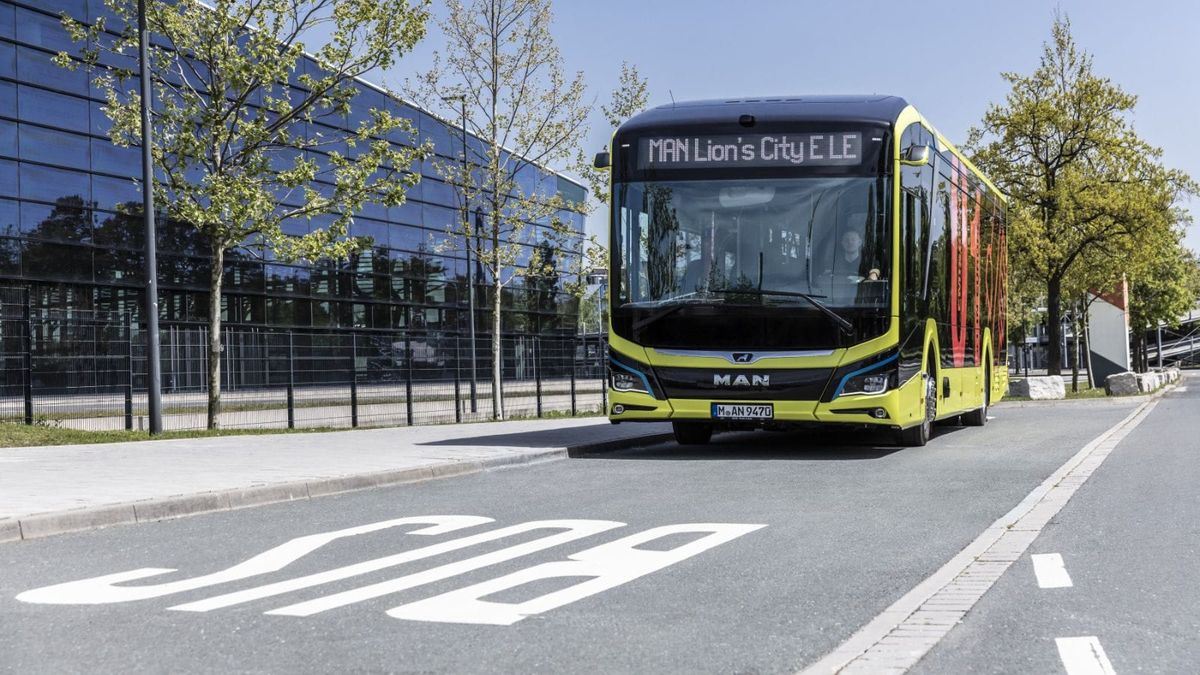
MAN recorded the sharpest climb. The German manufacturer's registrations surged 224% to 1,409 units, lifting its market share from 5.6% to 12.1% and vaulting it into second place. MAN says its Lion's City E alone accounted for more than 1,300 of those deliveries, a record for the model, and the company has since opened a second production line in Ankara to supplement its existing Polish facility in Starachowice.
Mercedes held third with 1,395 units, a 52% increase that kept its share broadly stable at around 12%. BYD, though, matched MAN's trajectory in percentage terms - registrations leapt 206% from 426 to 1,305 units, pushing its share from 5.5% to 11.2%. BYD delivered its 5,000th electric bus in Europe during the year, handed over in Denmark, and is expanding its Hungarian production facility to an annual capacity above 1,000 units.
Iveco Bus grew a more modest 33% to 1,091 units, though its share slipped from 10.6% to 9.4% as the overall market expanded around it. Wrightbus, which builds in Northern Ireland and sells predominantly into the UK, registered 921 units - a slight increase on 2024's 861, but its share dropped from 11.1% to 7.9%.
How big is the Chinese share of Europe's electric bus market?
The combined figures point to an increasingly prominent role for Chinese manufacturers. Yutong and BYD between them accounted for more than a quarter of all European e-bus registrations in 2025, and Chinese brands collectively hold around 28% of the market, according to industry analysis. That share is significantly larger than Chinese manufacturers hold in the European passenger EV market - and, critically, buses were excluded from the EU's tariffs on Chinese-made electric vehicles imposed in 2024. Whether that exemption survives as Chinese bus volumes continue to climb is a question worth watching.
The UK's role in Europe's electric bus push
The UK remains Europe's largest zero-emission bus market by volume. Registrations of zero-emission buses and coaches rose 62% to 2,523 units in 2025, with electric powertrains accounting for roughly 75% of new city buses entering service. Scotland was a particular bright spot, with registrations up 162% to 1,188 units, driven partly by the Scottish Zero Emission Bus Challenge Fund.
What's coming next for European electric buses?
Zero-emission buses now account for 60% of new EU city bus registrations, according to analysis from Transport & Environment, which suggests the urban transit sector is electrifying considerably faster than the passenger car market. Hydrogen fuel cell buses contributed 558 registrations across Europe in 2025, with Solaris supplying nearly half of them.
Among the larger contracts in the pipeline, Switzerland's PostAuto has signed a framework agreement with Solaris for up to 115 electric buses - a mix of 12-metre and 18-metre Urbino models - with deliveries running through to the end of 2027. An initial order for 33 buses has already been placed.
The broader trajectory is that manufacturer rankings are shifting fast, and the 60% city bus figure suggests urban public transport is becoming one of the more straightforward decarbonisation stories on the continent. The less comfortable question - for European manufacturers, at least - is how much of that growth is being captured by companies based in Zhengzhou and Shenzhen rather than Munich and Ulm.