Two in three new cars sold in Nordic countries are now electric
Norway hit 98.6% electric car sales in April - a new monthly record - while Denmark reached 81.9%, according to data from the Nordic road information council OFV. The UK, by comparison, managed 26.2%.

Norway registered 11,103 new passenger cars in April 2026, and all but 155 of them were electric. That is a 98.6% battery electric share, according to figures published by the Norwegian road information council OFV - a new monthly record, and the second consecutive month above the previous high.
The figure is so dominant that calling it a "market share" almost misses the point. In every single Norwegian county, more than 95% of new cars sold in April were electric. The petrol car, the diesel car, and the plug-in hybrid are not declining in Norway. They have, for practical purposes, disappeared from the new car market entirely.
Denmark went from 13% to 82% in 4 years
If Norway is the finished article, Denmark is the time-lapse. In April 2022, electric cars accounted for 13.2% of Danish new registrations. By April 2026, that figure was 81.9% - a market that 4 years ago looked much like the UK's has transformed into one that now resembles Norway's, with the country's EV share jumping 14 percentage points year-on-year in the first quarter of 2026 alone, according to the European Alternative Fuels Observatory.
Denmark was also the only Nordic market to grow in April, with new car registrations up 10.8% on the same month last year and the year-to-date market 15.1% ahead. Electric cars are now "the clear first choice among private car buyers," said Jonathan Schacht Halling Nielsen, deputy CEO of Mobility Denmark, who attributed the pace of change to favourable policy conditions.
Sweden and Finland lag behind, but both passed 40%
Sweden and Finland tell a different story, though most European markets would be delighted with their numbers. Sweden's EV share in April was 42%, up from 36.1% a year earlier, while Finland reached 48.8% - both above the EU average, both dwarfed by their neighbours to the north and west.
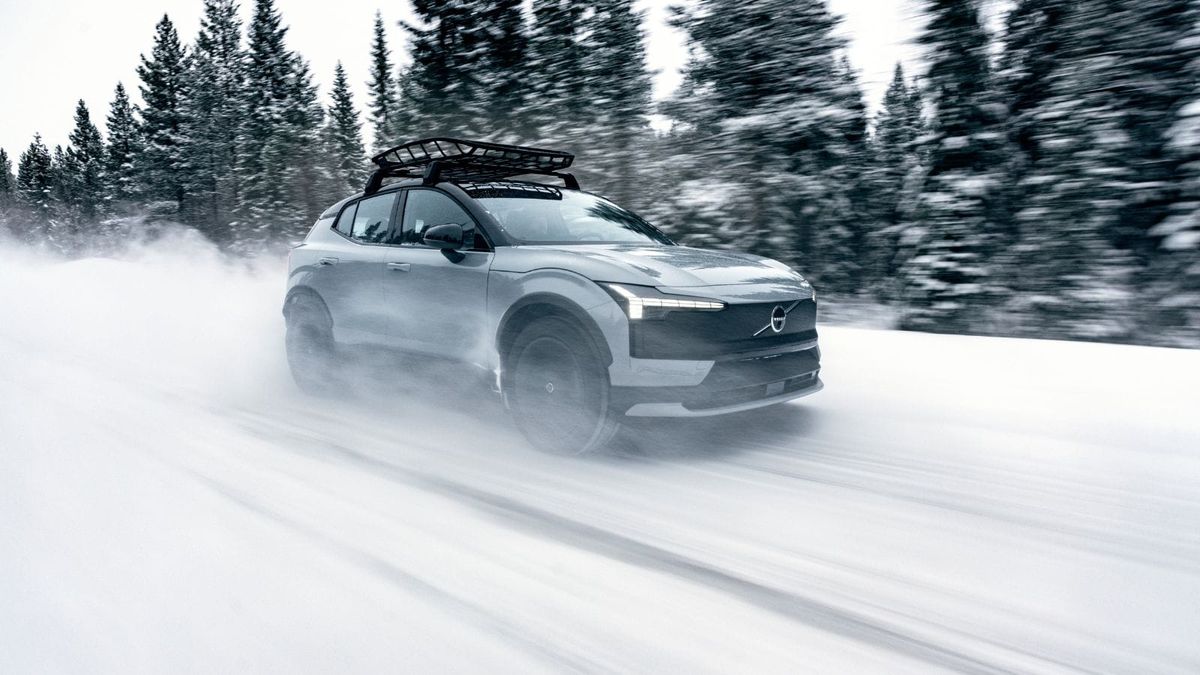
Sweden's overall market was down 1.6% in April, and Volvo continues to dominate the charts there - the EX40, XC60, and EX30 were the 3 best-selling models - but a new government EV subsidy approved around 2,500 applications in April, and it's the corporate fleet market that's dragging, with smaller fleets in particular holding back on purchases.
Finland's registrations fell 8.7%, driven by weakness in the business market. Teemu Rennola, CEO of Value Clinic, pointed to low consumer confidence and said a meaningful recovery would require an improvement in Finland's broader economic outlook.
How the UK compares
The UK managed a 26.2% electric car share in April 2026, according to SMMT data, and sits at 23.1% year-to-date - well below the 33% target set by the ZEV mandate, which requires manufacturers to sell a rising proportion of zero-emission vehicles each year or face fines. The UK has now passed 2 million cumulative EV registrations, but the gap between British and Nordic adoption rates is vast and, on current trends, widening.
Norway's journey to near-total electrification took the best part of a decade and was supported by a comprehensive package of tax exemptions, toll discounts, and charging infrastructure investment. Denmark's faster recent acceleration suggests that once the right policy conditions are in place, the tipping point can arrive sooner than expected. The UK's ZEV mandate - which relies more heavily on manufacturer obligations than consumer incentives - takes a fundamentally different approach, and at 23.1% year-to-date, it has a long way to close the gap.
The Skoda Elroq keeps turning up everywhere
The Volkswagen ID.4 topped registrations in Norway, but it was the Skoda Elroq that caught the eye across the region - most registered model in Denmark, top 10 in Norway and Finland. The Elroq passed 100,000 units produced earlier this year and finished as Europe's second best-selling EV in 2025, behind only the Tesla Model Y. Skoda, long the sensible shoes of the Volkswagen Group, has found a very comfortable fit in the electric crossover market.
Sweden, predictably, bought Volvos - the EX40, XC60, and EX30 occupied the top 3 positions. Finland was the odd one out, with the Toyota Yaris Cross (a hybrid) topping its chart, in a market still split between electric and conventional powertrains.
8,757 new vans, but a fleet that turns over slowly
Nordic van registrations were up roughly 23% year-on-year in April, with Sweden's van market surging 51.3% and Norway's rising 18.2%. OFV director Geir Inge Stokke pointed out that commercial vehicle electrification faces different pressures - range under load, charging logistics, payload, and upfront cost all weigh more heavily when the vehicle is a working tool rather than personal transport.
And then there is the stock problem. Norway, despite selling almost nothing but electric cars for several years now, has an EV share of just 33.5% across its total passenger car fleet. Denmark sits at 21%, Sweden at 9.1%, and Finland at 6.7%. New sales can shift rapidly. Replacing 2.7 million cars on Norwegian roads takes considerably longer.