Octopus and CATL plan 30 battery-swapping mega hubs for European trucks
Octopus Energy and CATL have formed a joint venture called Swaptopus to build battery-swapping hubs for electric lorries across Europe, with the first UK sites expected in 2027.

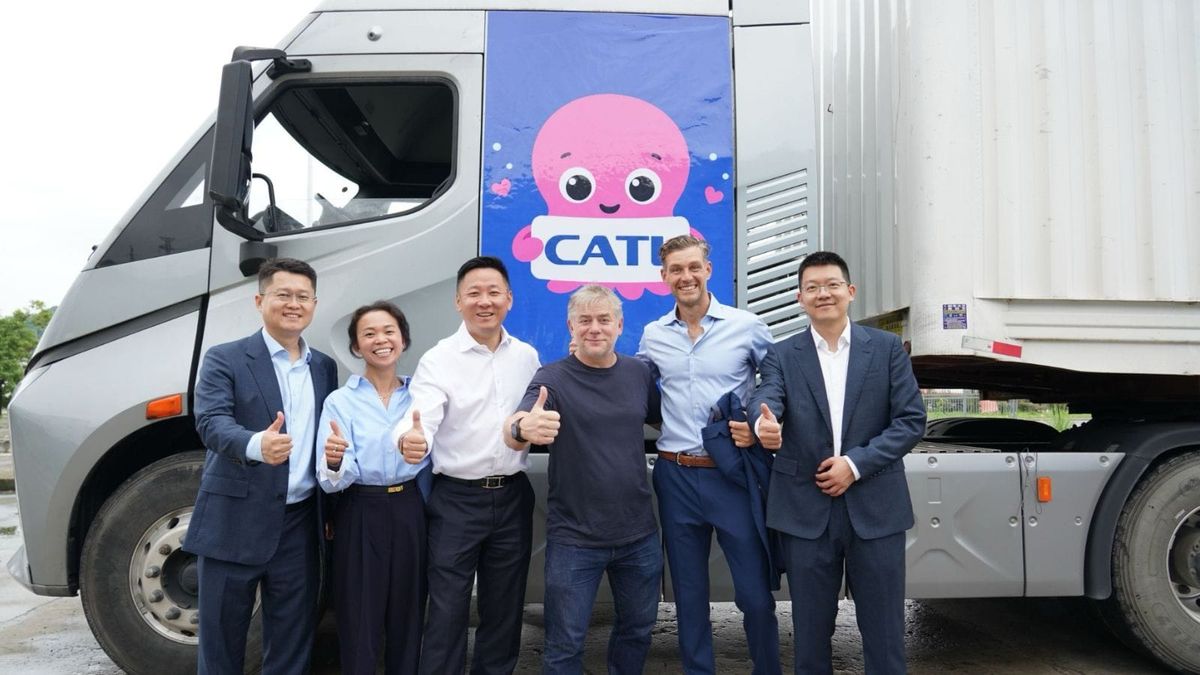
Octopus Energy and CATL, the world's largest battery manufacturer, have formed a joint venture to build a European network of battery-swapping hubs for electric lorries - bringing technology that CATL already operates at scale across China to a market where electric truck uptake is still constrained by charging infrastructure and grid bottlenecks. The venture, announced at Octopus's Energy Tech Summit on 22 June, is called Swaptopus.
The first UK mega hubs are expected to open in 2027, the companies say, with more than 30 planned across Europe by 2035. Each hub would allow drivers to swap a depleted battery for a fully charged one in minutes rather than waiting for a conventional charge, and the partners say each site could service thousands of lorries a day. At full scale, the network could support more than 300,000 electric trucks and unlock over £30 billion in private investment, the companies claim.
CATL's head start in China
Swaptopus is not starting from scratch. CATL has been operating battery-swapping stations commercially in China since 2022, and its network has grown to more than 1,600 stations for passenger cars and several hundred more for heavy-duty trucks through a subsidiary called Qiji Energy, with a combined target of nearly 4,000 by the end of this year. As recently as May, CATL launched a standardised swap system for light electric trucks in Shenzhen where batteries can be exchanged in around 2 minutes.
"We have field-proven this technology in China, and we are delighted to bring it to the UK and Europe," said Robin Zeng, CATL's chairman.
587 trucks in a market of 40,000
The UK registered 587 electric trucks in 2025, according to industry body the SMMT - roughly a 170% year-on-year increase, but still just 1.4% of the roughly 40,000 trucks sold that year. The first quarter of 2026 was weaker, with zero-emission truck registrations falling 16.5% to 81 units. High upfront costs and limited charging infrastructure both constrain demand. Depot upgrades require grid connections that operators say can take years to secure, and the UK's first megawatt-class public chargers for trucks only went live in January.
Swapping versus megawatt charging
Battery swapping is not the only approach to keeping electric trucks on the road. The Megawatt Charging System (MCS) delivers more than 1 megawatt of power and can replenish a truck battery from 20% to 80% in roughly 30-45 minutes, and the UK's first MCS hub went live at a logistics depot in the East Midlands in January as part of the government's £200 million Zero Emission HGV and Infrastructure Demonstrator programme. Three motorway service areas are due to receive MCS-compatible bays later this year.
MCS suits planned stops where trucks can charge during mandatory driver breaks. Battery swapping is faster, and Swaptopus argues the hub model adds a grid benefit - the batteries stored at each site can be charged when electricity is cheap and fed back into the grid at peak times, turning each hub into a virtual power plant. That flexibility is where Octopus comes in. The company already manages smart tariffs and grid balancing for 11 million households globally, and launched its Octopus Fleet platform for business EV charging in February.
Swaptopus will be led by William Rowe, who also founded Octopus Hydrogen. The companies have not confirmed which truck manufacturers will build vehicles with swappable batteries - a standardisation question that CATL has answered in China but which remains open in Europe's more fragmented market. The first hubs are expected in the UK in 2027.