Ford urges ZEV Mandate review as electric van sales hit half the target
Ford's UK chief says the mandate has 'drifted apart' from the market, calling on the government to follow the EU and recalibrate - with commercial vehicles the most acute pressure point.

Ford has called on the UK government to urgently review the Zero Emission Vehicle (ZEV) Mandate, with its UK Chair and Managing Director Lisa Brankin arguing that the regulation and the market have "drifted apart" and that the gap is getting wider.
In a LinkedIn post, Brankin said Ford "believes in a zero-emissions future" but questioned "whether the current policy path reflects how people buy and use vehicles today." She called on the government to follow the European Union, which has recently softened its own emissions targets for cars and vans, and to begin the UK review now rather than waiting for its originally scheduled 2027 date.
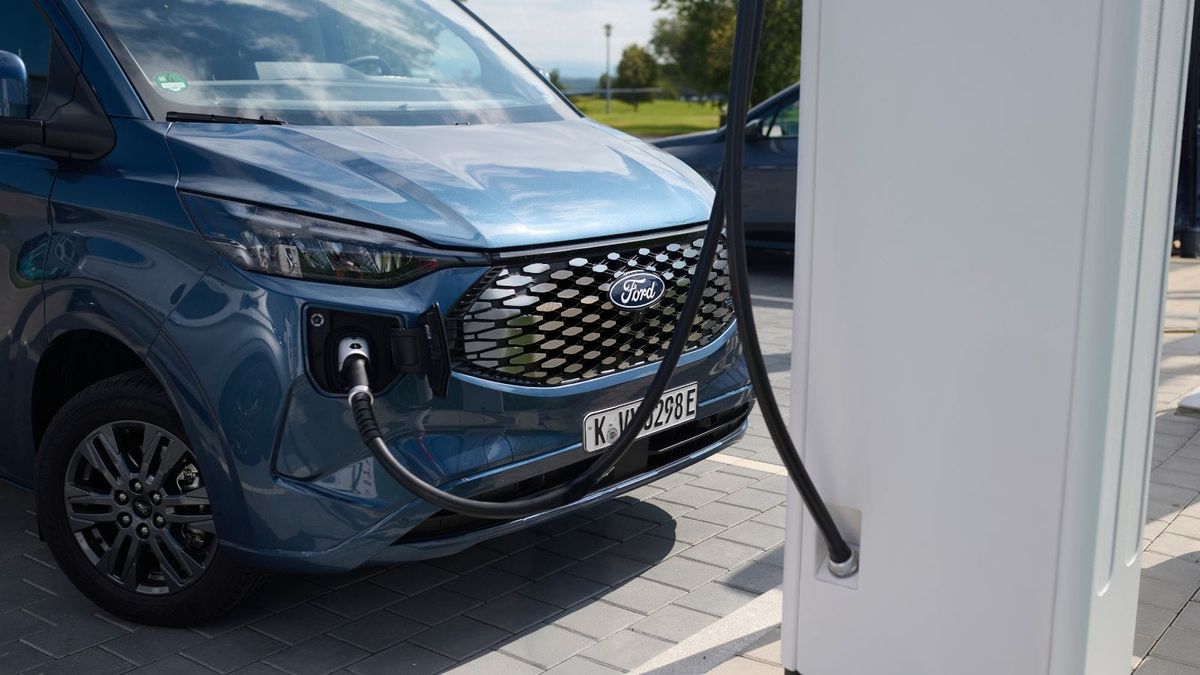
Ford is the UK's biggest van seller by a considerable margin, with the Transit Custom and Transit between them accounting for more than 34,600 registrations in the first half of 2026, according to the Society of Motor Manufacturers and Traders (SMMT). That market dominance also makes Ford the manufacturer most exposed to the mandate's non-compliance payments of £15,000 per van that falls short of the target. In 2025, just 5.4% of Ford's light commercial vehicle sales were electric, according to research organisation NewAutoMotive - against a mandate target at the time of 16%.
£10 billion in discounts, and still 9 points short
Across the broader new car market, battery electric cars accounted for 23.9% of UK registrations through the first five months of 2026, according to SMMT figures - up around 3 percentage points on the same period last year, but still 9 points short of the 33% the mandate requires this year. The SMMT forecasts around 26.8% full-year battery electric share, which would leave the industry well short even after accounting for the mandate's credit-trading and borrowing flexibilities.
The effort to close that gap has cost manufacturers an estimated £10 billion in battery electric vehicle discounts over the mandate's first two years, with the average discount reaching £11,000 in 2025, according to automotive data firm Autovista24.
Brankin acknowledged the government's demand-side support, describing the Electric Car Grant - which turned a year old this week - as welcome. The scheme offers up to £3,750 toward eligible electric cars with a list price of up to £37,000 and has supported more than 140,000 buyers since its July 2025 launch. Ford's own Puma Gen-E, which starts at £26,245 and qualifies for the full grant amount, has sold out of its initial UK allocation.
"We have invested heavily and discounted hard, and government grants have helped - yet sustainable demand is still short of the targets for both commercial and passenger vehicles," Brankin said.
'The switch doesn't make sense for some of them'
Electric vans took roughly 11.5% of UK light commercial vehicle registrations in the first half of 2026, according to SMMT data - less than half the 24% the mandate requires this year.
Brankin singled out Ford's van customers specifically. "The van is the heart of their business, and the switch to full electric doesn't make sense for some of them at the moment," she said. For operators running diesel Transits on long daily routes or in areas with limited depot charging, the electric equivalent presents challenges that a purchase subsidy alone does not resolve - range under load, downtime during the working day, and an upfront premium of roughly £15,000.
The E-Transit Custom starts at just under £45,000 before VAT, according to Carwow, and while the Plug-in Van Grant covers up to £5,000 for vans above 2.5 tonnes, the business case still depends on route profiles, depot infrastructure, and fuel savings that take years to materialise.
Brussels' recalibration
Brankin pointed explicitly to the EU's recent recalibration. Brussels replaced its 100% fleet-wide CO2 reduction target for 2035 with 90%, effectively allowing plug-in hybrids and range extenders to remain on sale beyond that date. The EU also cut its 2030 van CO2 reduction target from 50% to 40% and introduced three-year assessment periods in place of annual evaluation - giving manufacturers more room to manage uneven sales cycles without triggering penalties.
"The EU has recalibrated its targets to match the market," Brankin said. "It's time the UK reviewed the ZEV Mandate."
A review under way, but at what pace?
The government has already brought the mandate review forward from its original early-2027 timeline. Transport Secretary Heidi Alexander said it would be "completed in the next six months," and reports in The Sunday Times suggest the Prime Minister is considering cutting the 2030 car target from 80% to 50%.
Ford is far from alone in pressing for faster action. SMMT chief executive Mike Hawes has described the mandate's pace as "too far ahead of underlying natural demand," while Stellantis - the parent company of Vauxhall, Peugeot, and Citroën - has called through its UK managing director Eurig Druce for a review "now, to help us make the right decisions on investments."
The charging industry, however, has pushed back. Vicky Read, chief executive of ChargeUK, the trade body for the UK's electric vehicle charging sector, warned that weakening the mandate "for a third time would slam the brakes on infrastructure rollout." The Climate Change Committee, which advises the government on emissions policy, has separately called it "essential" that the mandate not be changed.
The 2028 car target is 52% - a 14-percentage-point jump from 2027's 38% - and the van requirement rises from 34% to 46%.